Across science, business, and art, we are waking up to the practical applications of our dreams.
Here we curate the best of this emerging field.
TIME spotlights recent dream research, including Robert Stickgold's finding that people who dream about a task they just practiced perform better on it afterward, even without remembering the dream. It also covers new lucid dreaming techniques that let researchers communicate with dreamers in real time using eye movements and facial signals (TIME, 2026).
Researchers analyzed dream posts on Reddit's r/Dreams community from 2019–2020, comparing content before and after the WHO's COVID-19 pandemic declaration. Nightmares and dream-related anxiety rose sharply after the declaration, suggesting social media could offer a real-time way to track population sleep health (Sleep Epidemiology, 2026).
Why do some people have vivid, emotional dreams while others dream differently? This study combines thousands of dream reports with detailed information about participants' sleep, cognition and daily experiences to explore how both stable personal traits and shared life events influence the content of our dreams. (Communications Psychology, 2026)
Dreams are usually treated as private material, useful mainly for therapy or personal reflection. This project asks whether they could also work as shared creative material, drawing on a Korean folk practice of exchanging auspicious dreams. Dasdaq pairs a bedside lamp that records dreams as soon as a person wakes with an AI system that reconstructs them into stories and images, then makes those fragments tradable on a market-style interface where other people can browse and draw on them for their own creative work (CHI Extended Abstracts, 2026).
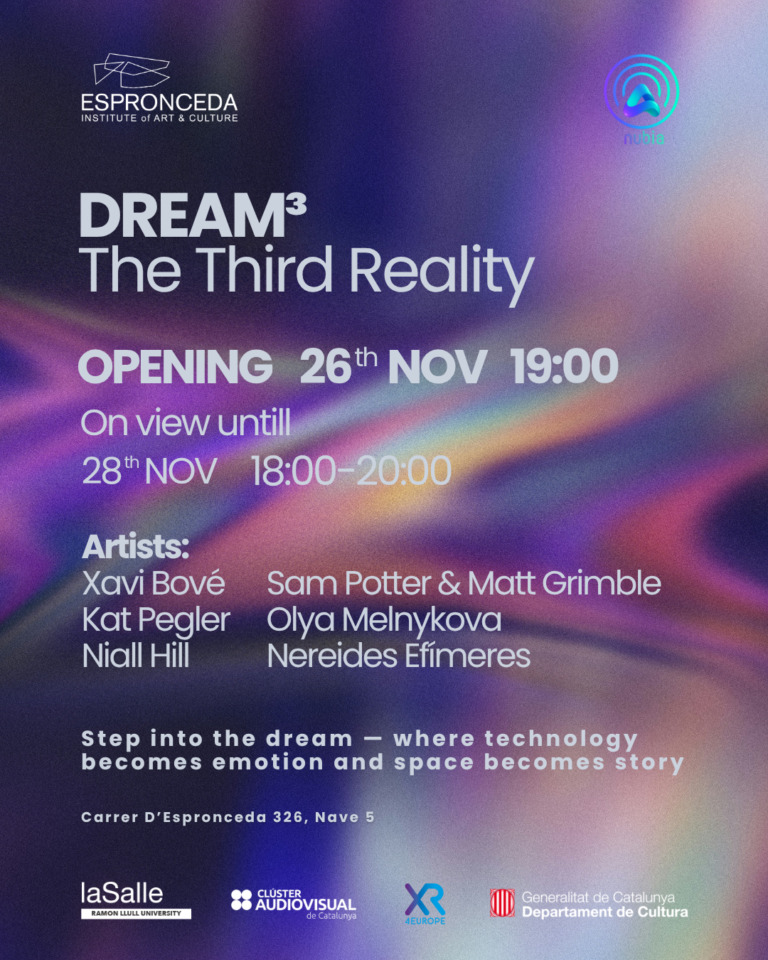
Dream³ — The Third Reality unites artists from the NUBIA LAB 2025 community — emerging and established creators exploring the intersection of VR, AI, sound, and digital storytelling. Through poetic code, speculative design, and interactive media, each artist reimagines reality as a shared act of dreaming, where technology becomes a mirror of consciousness and connection (ESPRONCEDA, 2025).
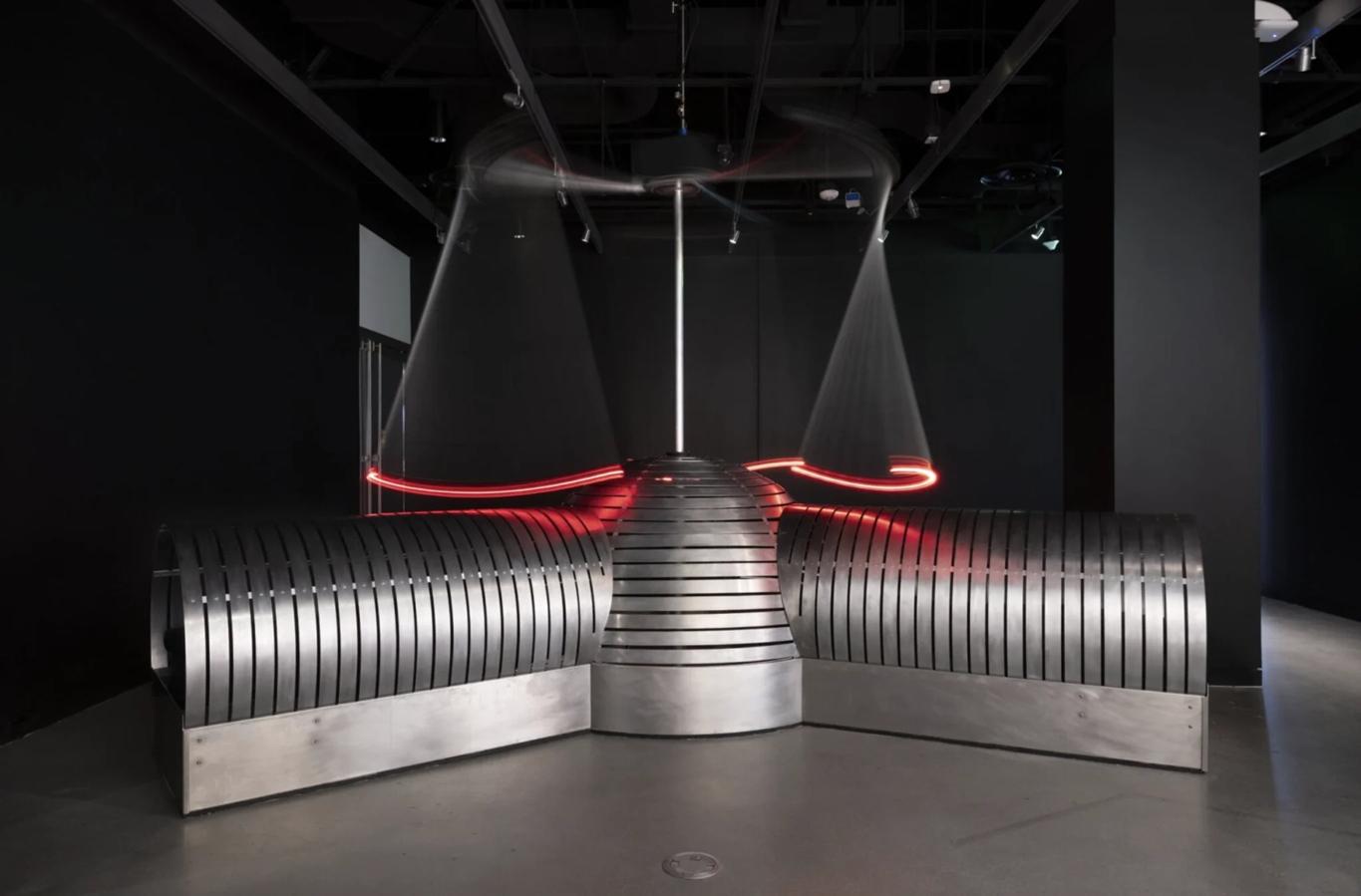
Hotel Room #2: Communal Dreams is a sculptural sleep installation by Carsten Höller, developed with dream scientist Adam Haar and artist Seth Riskin for the MIT Museum’s exhibition Lighten Up! On Biology and Time. Three participants sleep inside an engineered environment where pulses of light, sound and motion gently shape dream activity, drawing on recent MIT and Harvard research showing that dreams can be influenced in real time. The work brings art, neuroscience and architecture together to create a collective, synchronised dream experience (MIT Museum, 2025).
This paper introduces the DREAM database — the largest open-access collection merging sleep EEG/MEG recordings with standardized dream reports (505 participants, 2643 awakenings). By harmonizing neurophysiological data and mentation across multiple studies, it offers an unprecedented tool for exploring when and why we dream, across all sleep stages (Nature Communications, 2025).

Following the start of the full-scale invasion of Ukraine, many people started to dream about the Russian president Vladimir Putin. People have recorded and shared over 1000 of these dreams on social media, creating a surreal archive of the troubled collective unconscious in times of war. In Dreams of Putin, these visions are brought to life using a combination of found footage and scenes created in Unreal Engine, a 3D graphics programme for designing computer games. Fascinating in both its experimental form and themes, this is a film that is destined to remain in the subconscious of all who see it (Sheffield Doc Fest, 2026)

Dream States — the 18th edition of Artists’ Film International — explores the boundary between waking life and imagination, bringing together moving image works that reflect on how dreams shape our sense of time and identity. The programme highlights artists who use film to navigate memory, perception, and the subconscious, inviting viewers to inhabit these liminal spaces (Southwark Park Galleries, 2025).

Dream content sometimes changes before any obvious illness symptoms appear, potentially acting like an early warning system. The research suggests that in REM sleep the brain integrates internal bodily signals—errors, distortions, or threats—and represents them metaphorically in dreams, which may help detect or even respond to emerging health problems (Frontiers in Psychiatry, 2025).
Participants recorded their dreams using a dream probe, then had generative AI turn those dreams into images and passed them to the next participant as a prompt for their own dream. The relay format, combined with AI-generated visuals, made people more comfortable sharing personal dream content, since the images added some distance from the dream itself and eased privacy concerns. The researchers see this as a role for AI in making dream sharing more social and collaborative (CHI Extended Abstracts, 2025)

This paper investigates the dreams of Ukrainian women who fled to Poland after the Russian invasion, revealing how dreams can play a powerful role in coping with trauma and adapting to new lives. Drawing on interviews with 50 refugees, the study finds that, while many dreams reflect the pain and anxiety of war, a surprising number also serve an adaptive purpose—helping women feel hope, joy, or strength in the face of adversity (International Journal of Dream Research, 2025).

This study finds that recurring everyday dream-themes — things like falling, enjoying good food, or sexual experiences — show meaningful correlations with mental health symptoms among Generation-Z. It suggests that the content of ‘typical dreams’ may offer important insights into psychological well-being for young people (International Journal of Dream Research, 2025).

Can dreaming really help solve waking problems? And could a specific form of dream analysis help an organisation better achieve shared goals and objectives? In this INSEAD Knowledge podcast, Susan Long, Emeritus Professor at the National Institute of Organization Dynamics Australia and Michael Jarrett, Professor of Management at INSEAD offer their perspective on the value of social dreaming for firms (INSEAD Knowledge, 2025).

Dreams from people living on the Isle of Sheppey are weaved together, using AI, human curation, and imagery to highlight shared motifs like carnivals, dogs, mazes, climbing, and steam. The work creates a communal dream-sequence that blends individual fragments into something collective—surfacing the emotional highs and anxieties of that community (Adam Chodzko, 2025).

Cosmologyscape is an invitation to the public to dream. Created by artists Kite and Alisha B Wormsley, and selected in Creative Time’s 2022 Open Call, the multimedia and participatory public art project unfolds across multiple sites, digital and in public space (Creative Time, 2024).

The exhibition "Le temps d’un rêve / In the space of a dream" at the Musée des Confluences in Lyon, France, is a comprehensive exploration of dreaming, covering its science, cultural representations, and artistic endeavors (Musée des Confluences, 2024).

Dream data from over 13,000 reports in 2024 revealed that more than 70% carried anxious or fearful emotions, with a striking spike around the U.S. election. Yet as the year went on, these anxiety-laden dreams gave way to themes of growth, resilience, and transformation, showing how collective stress can shift into adaptation (Dream Decoder, 2024).

Dreams help us emotionally process the day’s challenges, reduce the intensity of distressing memories, and strengthen resilience. By getting enough quality sleep, tuning habits like pre-sleep reflection or sensory cues (scents or sounds), and using tools like memory reactivation or dream journaling, we can boost these cognitive benefits (The Guardian, 2025).

This study examines how two major crises—the COVID-19 pandemic and the Russo-Ukrainian War—impacted sleep patterns and dreams in Portugal’s general population. Researchers analyzed how these crises shaped dream recall, nightmare frequency, and emotional dream content, revealing key psychological differences between pandemic and war-related dreams.

More than half of Americans aged 18-35 say they’ve had dreams influenced by ads, and about two in five believe advertisements are already infiltrating their sleep. While most report that such dreams didn’t spur purchases, one in three say they did, and many would accept ads in exchange for discounts—raising serious questions about the commercialization of our subconscious (The Media Image, 2025).

Following the invasion of Ukraine in 2022, students were invited to keep diaries and dream journals to capture what they saw, heard, and felt. The resulting book layers these personal records with artistic materials and scholarly essays on fear, rupture, and resistance, offering rare insight into the everyday and emotional dimensions of war (Routledge, 2024).

This academic paper proposes that wartime dream diaries become testimonial acts, offering visibility to experiences of violence and trauma that society often silences. Through sharing dreams, individuals engage in both self-disclosure and political memory, making dreams themselves a form of witnessing and relational ethics in times of war (Humanities, 2025).

This paper explores how dreams and visions shape the way people understand and construct their worlds. Anthropologist Katherine Swancutt examines how different cultures view dreaming as more than just a personal experience—it can be a way of gaining knowledge, making decisions, and shaping social structures (Annual Review of Anthropology, 2024).

In the lead-up to the final 10 episodes of LEGO® DREAMZzz™ Night of the Never Witch, a new study reveals that children can learn how to guide and change their dreams, similar to the characters in the series (Lego, 2024).
Most sleep technology focuses on optimizing sleep — tracking cycles, adjusting the bedroom environment — rather than what happens inside a dream. This project takes the opposite approach, treating dreams as design material. Researchers built the dream sticker machine, a device that turns a written dream into an AI-generated image, creating a physical object people can display, share, or reflect on; they then used it as a research probe to see how people imagine their dreams taking form in the real world (Designing Interactive Systems, 2024).

This qualitative study of 242 dreams collected after the Hamas terror attack of October 7, 2023, shows how national trauma and heightened mortality salience were mirrored in dream content.
In a survey of 233 young people in Hong Kong, researchers found that vivid or altered dreams (rich in sensory detail or unusual content) were positively linked with better problem-solving ability. However, frequent or intense dreaming was surprisingly associated with lower resilience, suggesting that the number or strength of dreams may need to be balanced for psychological well-being (International Journal of Dream Research, 2024).
This survey of 340 Taiwanese employees found that attitudes toward dreams are closely linked with workplace well-being. In particular, seeing dreams as meaningful was strongly associated with higher well-being, while focusing on ‘understanding’ dreams showed a surprising negative relationship.

Prophetic’s Halo headband claims to induce lucid dreaming through non-invasive neurostimulation—letting wearers become aware in dreams and even use that dream-state for creative problem solving (The Independent, 2023).
We work with research, design, and media teams to develop original projects that draw from dream content. Get in touch to discuss a collaboration.